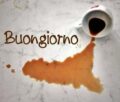
Italian will not let you like coffee. It makes the coffee do the work — mi piace il caffè, the coffee is pleasing to me — so the thing you enjoy becomes the subject of the sentence and you become the one it happens to. English speakers find that back to front for a fortnight and then rather enjoy it, because a good deal of the language turns out to lean the same way. That is more or less how I teach: one habit at a time, said aloud often enough that it stops being strange and starts being how you talk.
Lessons are one to one over Microsoft Teams at £30 an hour, arranged around shifts, school runs and whatever else your week contains. There are also online groups for beginners, deliberately small so that everyone gets to speak; ask me about the next one. I am Sicilian, from Catania, and I have been teaching for more than twenty years — QTS, PGCE, Cambridge CELTA, and a stretch teaching the International Baccalaureate. The adults I work with are mostly travellers, heritage speakers, and people with an exam in front of them. Phone 07786 107293 and we can talk it through.
What brings Newcastle people to Italian
Newcastle sends a great many people to Italy. The airport has you in Milan or Pisa before lunch, and a fair share of the adults who contact me are heading somewhere specific: a wedding outside Verona, a walking week in the Dolomites, a term abroad that quietly became a plan. Others are in it for the long haul — an exam to sit, a language half-remembered from family, a retirement with room in it at last. Three hundred miles makes no odds to any of that. Gosforth, Jesmond, Whitley Bay, over the water in Gateshead: the lesson arrives the same way.
Ready to start? Ask about small-group classes for beginners
Prefer one to one? See how online lessons work
Not ready yet? Grab the free 50 Essential Italian Phrases PDF
Want a tutor rather than a class? How I work as an Italian tutor
Or ask Laura a question
“Laura is a great teacher — warm, friendly, knowledgeable and encouraging. I really like the style of the lessons with a combination of conversation and worked exercises.”
— Jess Read all my Google reviews →
From Byker to Benton: the Marcantonios and Tyneside’s Italians
Newcastle’s Italian history is easier to follow than most, because a good deal of it is still trading. Giovanni Marcantonio reached the city in the 1890s from the mountains around Monte Cassino, that stretch of country between Rome and Naples which sent Italians to towns all over Britain, and settled among the small Italian community in Byker. His son Antonio, born in 1886, went back to Italy to marry Angela; she came to Tyneside in 1904 with their daughter Anita. Antonio began making ice cream in a room of the house, freezing it in small pans of salt and ice. He finished with a factory on Stepney Bank turning out five hundred gallons a day and five parlours, the first of them in the Grainger Arcade. The firm is Mark Toney, it is still in the family, and the ice cream is still made at Benton.
By 1900 there were around 500 Italians in Newcastle, and after the First World War the cafes, sweet shops and fish and chip shops multiplied across the North East. The war that followed was much harder on them. When the Arandora Star was torpedoed on 2 July 1940 with interned Italian civilians aboard, North East families lost people, and the researcher Simona Palladino has since gathered oral histories showing how that loss was carried down the generations here. Antonio Marcantonio died in 1960 and lies in All Saints Cemetery under a statue of a friar holding a child.
Common questions
I go blank the moment I have to say something. Will you make me speak in the first lesson?
Yes, but not in the way you are imagining. The first thing you say in Italian will be four words long and you will have heard me say it twice already. We build outwards from there, and I will always give you the sentence before I ask for it back. In a one-to-one there is no room of classmates waiting while you think, which is what most people are actually dreading. Going blank is normal, and I have twenty years of hearing wrong verb endings behind me. Yours will not be a new one.
Is there any point learning holiday Italian, or should I be aiming at proper fluency?
Holiday Italian gets you the coffee. It rarely gets you the answer, which is where people come unstuck — you ask beautifully and then the reply arrives at full speed. So I teach the small amount of structure that sits underneath the phrases: the verb endings, the difference between asking and telling, how to say you did not catch that. A few months will not make you fluent, and I would not claim otherwise. It will make you someone who can hold a short exchange and understand roughly what came back. Fluency is a longer road, and it starts on the same stretch.
What happens if I miss a week of the course?
You come back the following week and we pick you up. I send round what we covered and the material that went with it, so you are not walking in cold, and the first ten minutes of every session revisits the week before in any case. If it turns into two or three missed weeks — a work trip, illness, life — an hour one to one will put you back alongside the group. One-to-one lessons are simpler still: give me a day’s notice and we move them.